• Home
  • what we teach
    • Choice Theory®
    • Lead Management
    • Reality Therapy
    • Take Charge of Your Life
    • Training Pathway
  • About Us
    • About Us
    • About Dr.Glasser
    • Board & Governance
      • Annual reports
      • Mission & Board
      • Strategic Plan
      • Constitution
    • Glasser Quality schools
      • Quality School Resources
  • All Posts
    • Articles
    • Newsletters
    • Multimedia
  • Events
    • Home
    • what we teach
      • Choice Theory®
      • Lead Management
      • Reality Therapy
      • Take Charge of Your Life
      • Training Pathway
    • About Us
      • About Us
      • About Dr.Glasser
      • Board & Governance
        • Annual reports
        • Mission & Board
        • Strategic Plan
        • Constitution
      • Glasser Quality schools
        • Quality School Resources
    • All Posts
      • Articles
      • Newsletters
      • Multimedia
    • Events
  • admin@glasseraustralia.com.au
Members Login
Glasser Australia
Glasser Australia
  • Pay Membership ❌
  • Home
  • what we teach
    • Choice Theory®
    • Lead Management
    • Reality Therapy
    • Take Charge of Your Life
    • Training Pathway
  • About Us
    • About Us
    • About Dr.Glasser
    • Board & Governance
      • Annual reports
      • Mission & Board
      • Strategic Plan
      • Constitution
    • Glasser Quality schools
      • Quality School Resources
  • All Posts
    • Articles
    • Newsletters
    • Multimedia
  • Events

The difference between External and Internal Control Psychology

  • November 21, 2025
  • Glasser Australia Team
  • 0

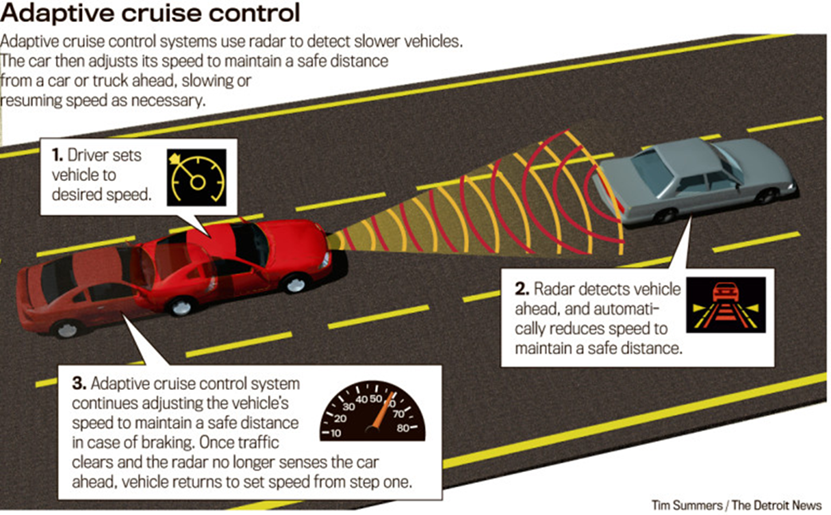
– an explanation using a Metaphor of Adaptive Cruise Control

How you answer the key question below, can indicate whether your explanatory beliefs are based on the principles of external or internal control psychology.

With adaptive cruise control engaged in the RED car, when the car in front brakes, then the RED car behind also brakes to maintain the desired gap or space between the two cars

The key question is:

Does the braking of the GREY car in front CAUSE the braking behaviour in the RED car?

A “yes” answer would come from what is known as external control thinking and paradigm – a simple cause/effect, stimulus/response model to explain what is happening. From an external observation of external events, the stimulus of the car in front slowing, can be seen simply as the cause of the subsequent response in the RED car: a simple CAUSE/EFFECT explanatory model.

A “no” answer would indicate some understanding and awareness that all is not a simple at it might seem. It would indicate some awareness that between the external ‘stimulus’ and the observed response, an internal control system is part of the processes. This information about the size of the gap results in an internally controlled response to maintain the desired space between the two cars.

The car in front has no part in this process other than being the source of some external information that the RED car’s system perceives.

Looking at the diagram above you can see that if the car in front slows, the radar would detect that the space has decreased and so, to maintain the set (desired) distance it automatically applies its brakes to maintain the space set by the red car’s driver. In a sense the red car can seem to choose to behave autonomously by braking. The car in front does not control the internal processing system or actions of the red car that the driver has set.

In the same way, as Choice Theory explains how we are an internal control system. Nothing outside from the external world MAKES us do anything.We choose our behaviour response from our set of internal, known, behaviour options to reduce the GAP between what we HAVE and what we WANT.  Our internal processing system operates to choose an action or behaviour in seeking to maintain a preferred state.

As a driver of a car without Adaptive Cruise Control, I have an internal picture of what is a safe distance between the car I am driving and a car in front. Just like the ACC system, I will CHOOSE to brake to maintain a desired safe distance. What I do in my car is my response to what is happening externally. The car in front of me has no control over how I act or choose to respond.

In the same way, when we drive on the road, we have no control over other driver’s cars or behaviour. We only control our own driving.

Choice Theory teaches us that we only choose and control our own behaviour to try to get as close as we can to what we want in the world. This includes choosing our most effective response in dealing with information coming from the external world.

Road rage is actually the chosen behaviour of someone who is (or has chosen to be) angry and frustrated about the behaviour of another road user and whose “road rage” actions are intended to control the behaviour of another driver by criticising, abusing or even seeking to “punish” this other driver.

Profile photo ofgaustralia

Glasser Australia Team

Glasser Australia is renowned for producing quality teaching and training in Education, Business, Counselling, Mentoring, Coaching, Professional and Personal Development.

Glasser Australia is a member of William Glasser International, a globally recognised, collaborative and connecting organisation promoting Dr. William Glasser’s Choice Theory, Reality Therapy and Lead Management and together we accept and uphold the United Nations Universal Declaration of Human Rights.

Glasser Australia is a for purpose community-based organisation registered with the Australian Charities and Not for Profit Commission (ACNC).

http://www.glasseraustralia.com
  • Previous Choice Matters – November 2025
  • Next Choice theory: Ellen Gelinas at TEDxVaughanWomen

Leave a Reply Cancel reply

Your email address will not be published. Required fields are marked *

Recent Posts

  • Webinar #4 The Solving Circle
  • Choice Matters – November 2025
  • The difference between External and Internal Control Psychology
  • Choice theory: Ellen Gelinas at TEDxVaughanWomen
  • Choice Matters – October 2025

Recent Comments

  1. Jane on Choice theory: Ellen Gelinas at TEDxVaughanWomen
  2. Jane Newman on A closer look at the Caring Habits
  3. Gwen Sands on Rethinking Behaviour: A Shift Towards Understanding, Not Judging
  4. lizzie on Involuntary Behaviour, Very Brief signal.
  5. Glasser Australia Team on Involuntary Behaviour, Very Brief signal.

Popular Tags

Basic Intensive Training 2024 BIT
Glasser Australia

Keep me up to date!

Please select your area of interests :


Signup for our newsletter to get the latest news, updates and special offers in your inbox.

Glasser Australia

Address

  • Ipswich Q 4305 Australia
  • 0427 667 385
  • admin@glasseraustralia.com
This image has an empty alt attribute; its file name is wlogwgi.png

Link

  • Login/Register
  • About Dr. Glasser
  • Training Refund policy
  • Conference Refund policy
  • Privacy Policy

Acknowledgement

Glasser Australia respectfully acknowledges the Traditional Owners of the land on which our members live, work, learn and play.
We acknowledge their continuing connection to land, waters and community.  We pay our respect to their Elders, Past, Present and Emerging.

GLASSER AUSTRALIA © Copyright 2025 | Developed by 4 Rivers Web Design

  • Blog
  • Contact Us
  • Upcoming Events